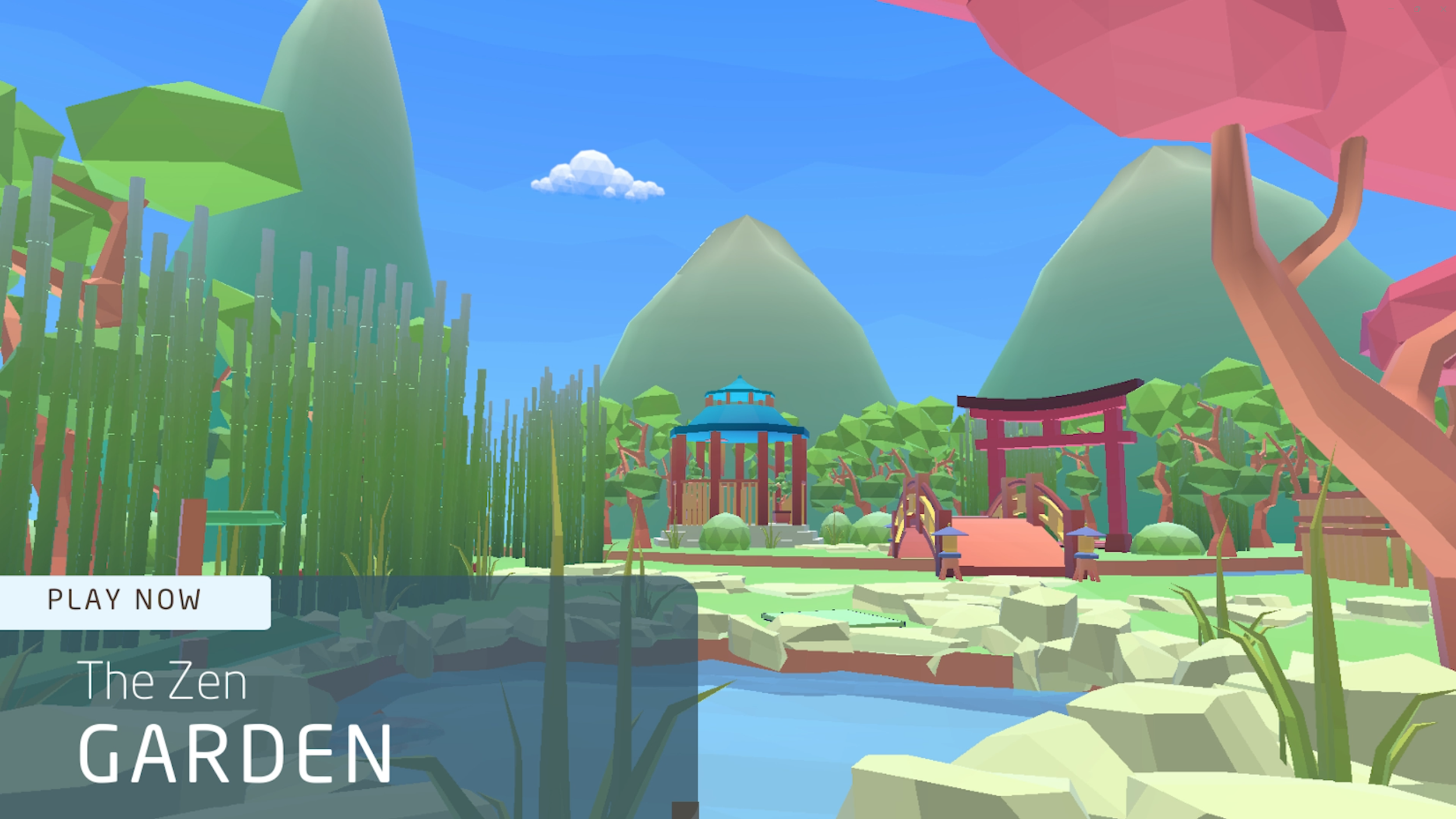
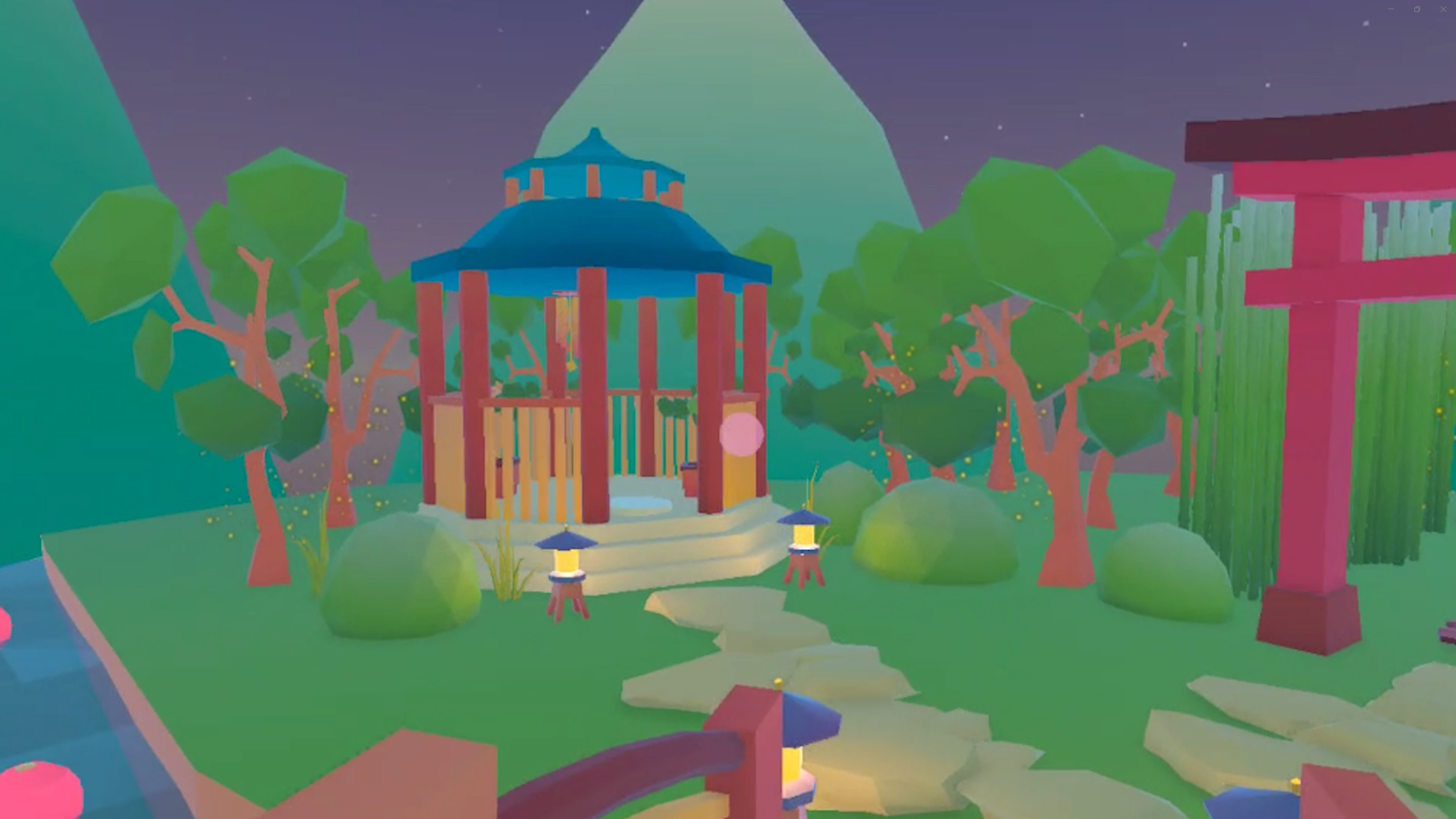
Gameplay capture from Zen Garden VR build
Associate Game Producer
September 2024 - Feb 2025
Client: VRelax (therapeutic VR for healthcare)
Therapeutic VR experience using HRV biofeedback to support patient relaxation, developed for healthcare client VRelax.
Role scope: Production planning, stakeholder coordination, milestone tracking, HRV integration support.
The Zen Garden VR was created by a 5 people over a span of 6 months.My contributions:
Led cross discipline planning with a 5-person team and 2–3 VRelax stakeholders to define priorities and risks.
Tracked ~12 biweekly milestones across the 6-month project, adjusting scope and sequencing to maintain delivery.
Maintained production visibility through regular sprint reviews and stakeholder alignment sessions.
Coordinated HRV integration by sourcing and connecting an external physiological sensing specialist.
Managed localization planning and integration into the production schedule.
Outcomes:
Delivered a playable biofeedback driven VR prototype within a 6-month cycle.
Validated HRV responsive interaction loop through multiple stakeholder demos and user testing sessions.
Zen Garden concept approved by VRelax for integration into their production platform.

The Idea
Zen Garden VR was developed in collaboration with VRelax, who are the official client for the project.
The team was tasked with creating a new interactive experience for VRelax’s therapeutic VR platform used by hospital patients. The core problem statement provided by the client was to design an experience that could support patient relaxation by responding in real time to physiological stress indicators measured through heart rate variability (HRV) monitoring.
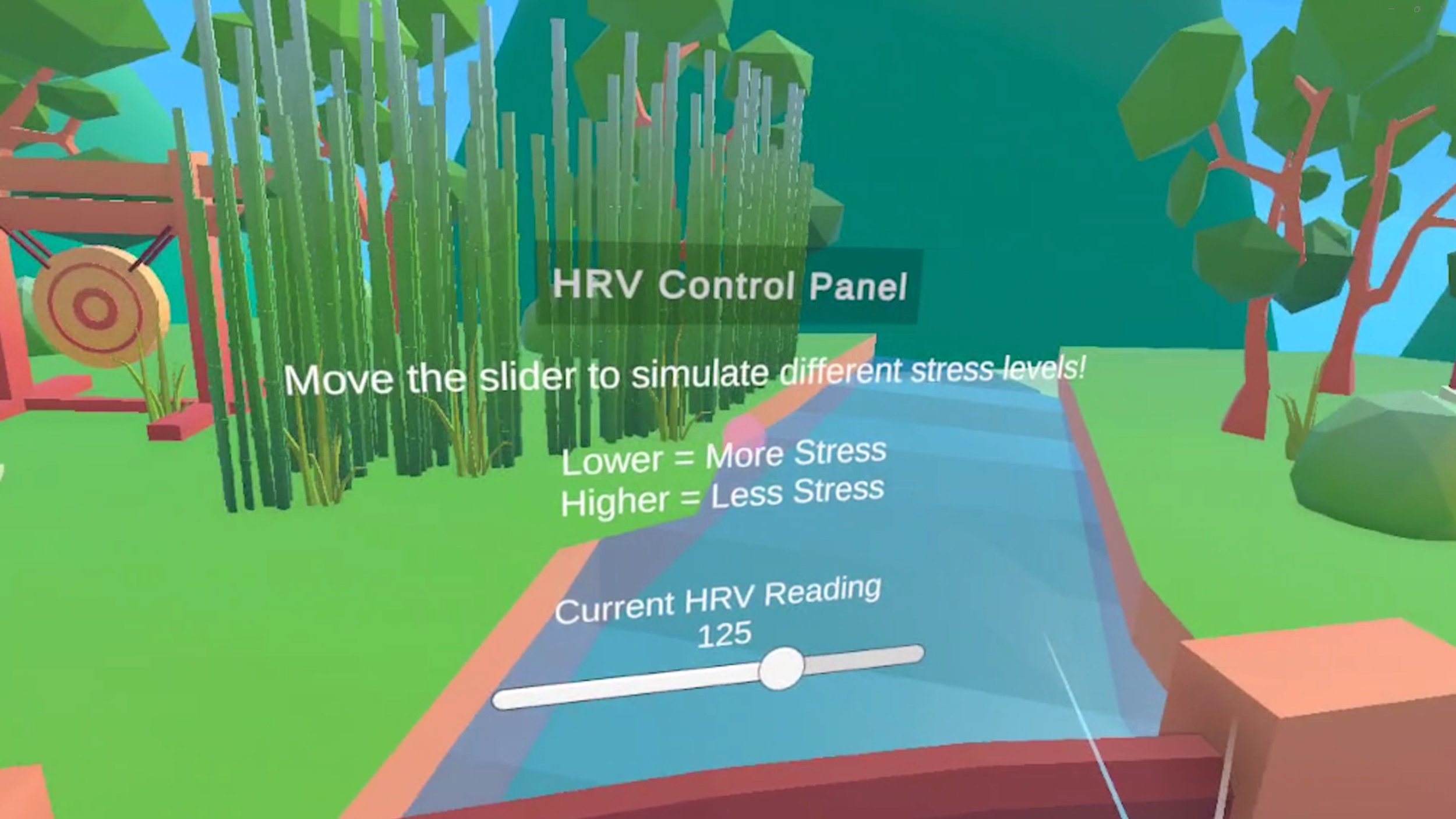
This required the experience to dynamically adapt to the user’s stress state, promoting calm when elevated stress was detected and maintaining a soothing baseline otherwise.
The gameplay and interaction model therefore needed to be directly connected to biometric input rather than traditional player performance metrics.
The Zen garden concept emerged through research into stress reduction, restorative environments and sensory calmness, combined with ongoing co-creation sessions with VRelax stakeholders and iterative user testing.
This process led to an experience centered on gentle interaction, environmental harmony and biofeedback driven adaptation aligned with therapeutic relaxation goals.
The Process
Client driven, sprint-based production for a 5 person team developing a therapeutic VR experience with VRelax.
Structured work into biofeedback driven feature slices focused on calming interaction and environmental response.
Planned and tracked tasks in Jira and Trello, with Slack and Confluence supporting team and client coordination.
Facilitated sprint planning and progress reviews to maintain milestone delivery.
Connected the team with an external HRV specialist to guide physiological data integration and feasibility.
Ran regular stakeholder demos and user testing sessions to refine responsiveness and therapeutic effectiveness.
Maintained alignment between client expectations and team execution throughout development.
The Team
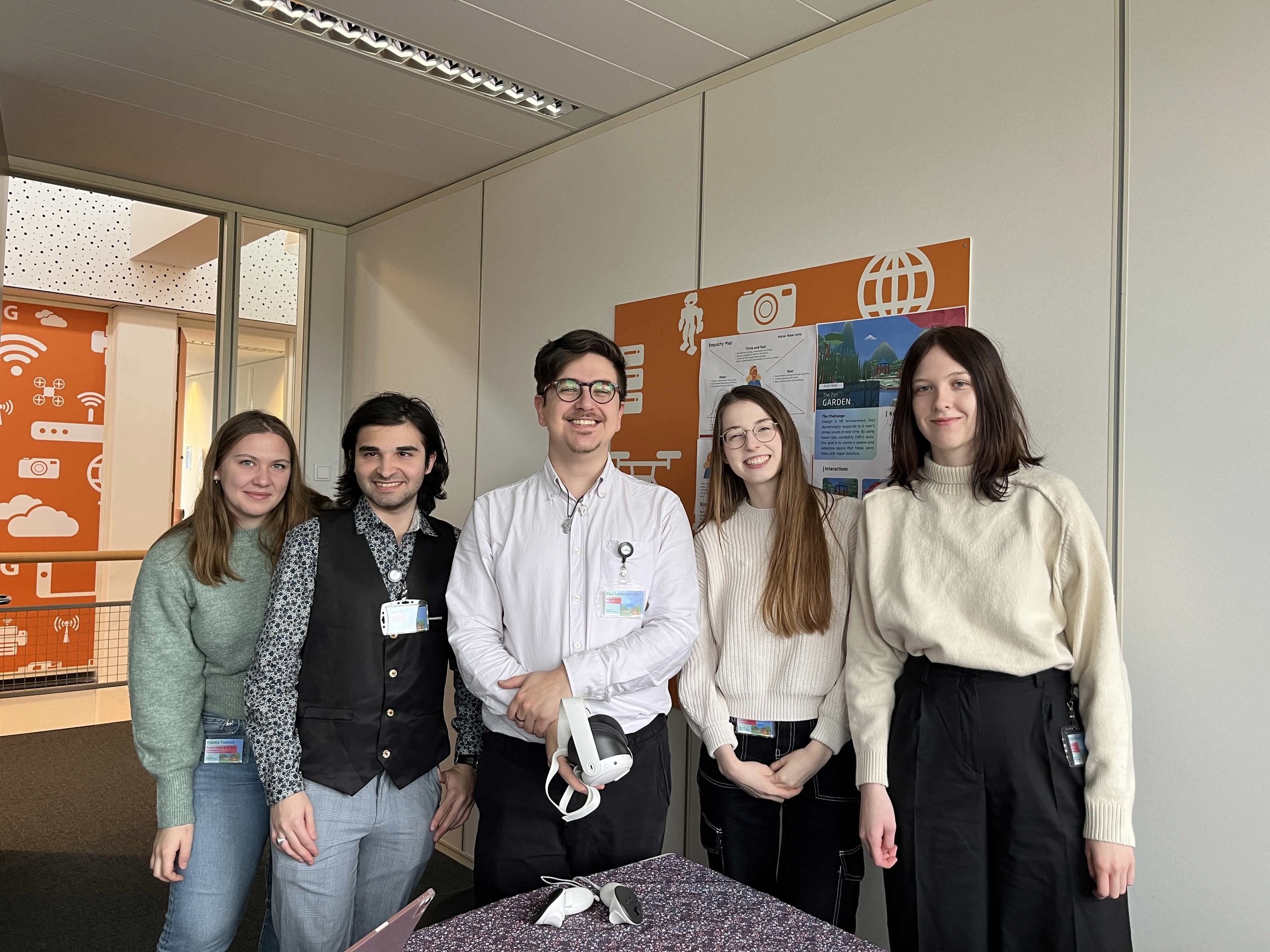
5 person cross-functional team: programmer, game designer, 2 artists, and game producer.
As a producer, I led sprint planning, production tracking, and client coordination with VRelax, enabling the team to deliver a biofeedback-driven VR experience within a 6 month development cycle.
What went well
Reliance on Domain Experts and External Advisors
We deliberately leveraged expertise both within and outside the team rather than centralizing decisions.
Discipline leads owned solutions in their areas, accelerating iteration and reducing bottlenecks.
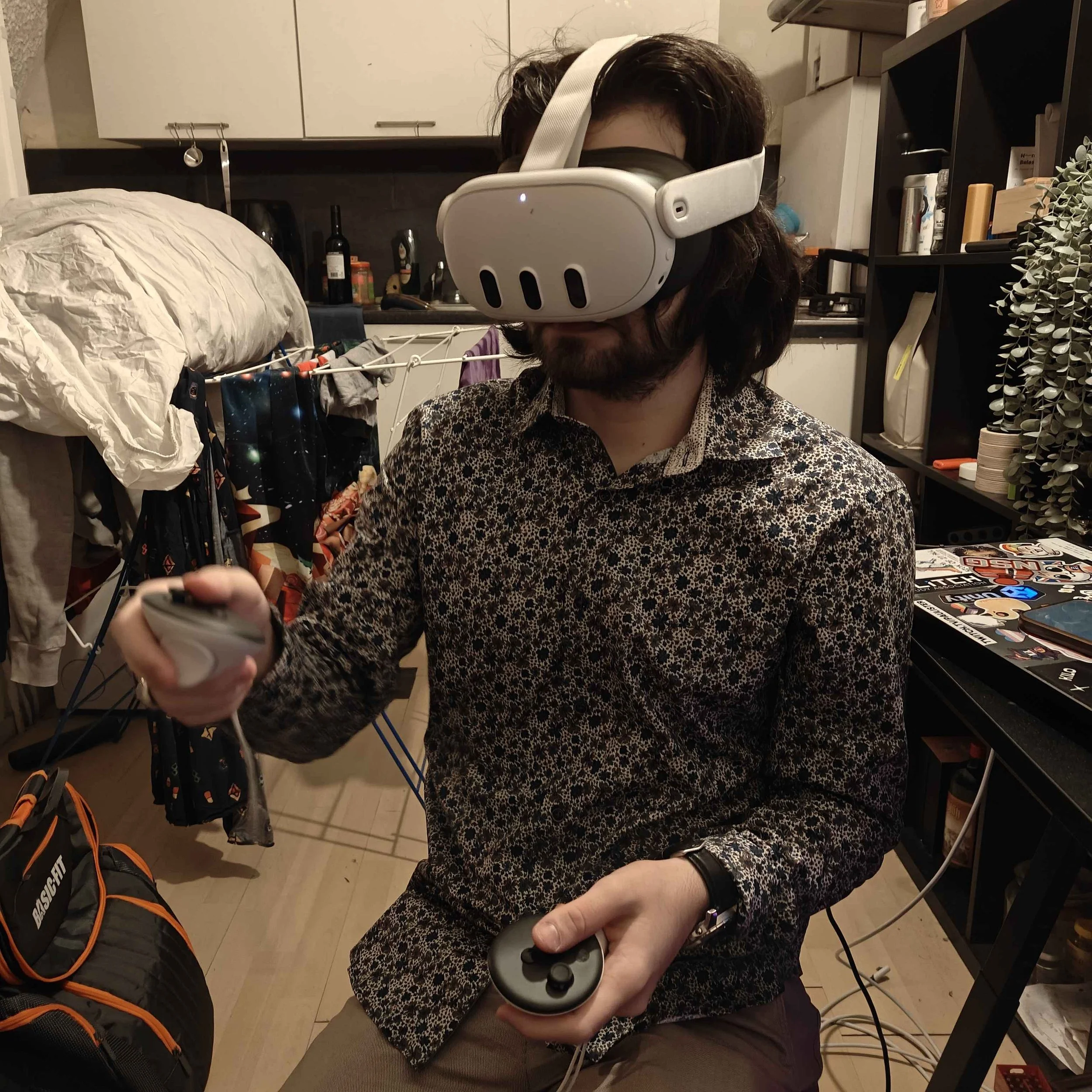
We also sought guidance from Hanze University lecturers, partner experts and regularly tested during Hanze’s monthly playtest sessions to gather structured professional feedback.
Structured Communication with Stakeholders
We maintained consistent visibility with collaborators and stakeholders through milestone reviews and playable builds. Progress and scope tradeoffs were communicated early, enabling timely decisions and alignment.
VRelax reported good satisfaction with the quality and direction of the Zen Garden experience within the project’s limited timeframe and confirmed the concept would be integrated into their production application.
High-Performing, Self-Directed Team
The team operated with ownership across disciplines from early formation. Clear sprint goals and task ownership enabled independent progress while maintaining shared milestones.
This resulted in reliable weekly delivery and minimal rework despite the team forming alongside development.
Gameplay First Prioritization
We consistently prioritized core interaction feel and responsiveness over secondary systems.
Production decisions favored refining the moment to moment experience before expanding scope, ensuring the central mechanic reached a satisfying level early and anchored further iteration.
Active External Playtesting and Industry Validation
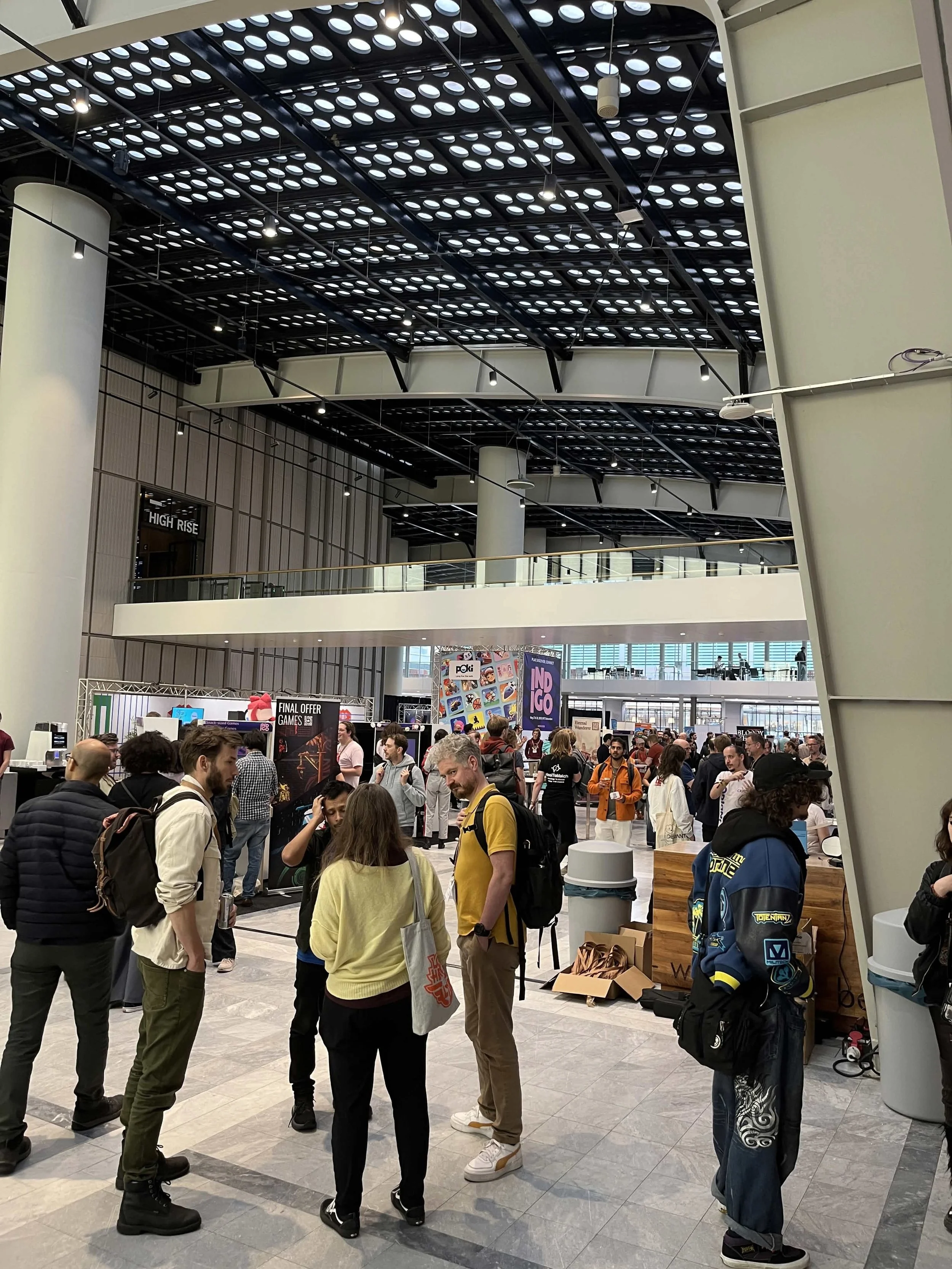
We talked about the project at Indigo, where discussions with industry professionals provided additional expert feedback on design direction and implementation approach.
Regular stakeholder demos (~3–5 sessions).
What went wrong
Late Start on HRV Integration
We underestimated the technical complexity of real-time HRV sensing, signal processing and interaction mapping.
The team did not begin integration work until the final 2 months, leaving limited time for iteration and stability.
This compressed testing and increased implementation risk late in production.
Insufficient Early Technical Validation
Early prototypes focused on experience design while assuming HRV feasibility.
We lacked a proof-of-concept spike and hardware pipeline validation in the first milestones, which delayed discovery of integration constraints and data reliability challenges.
Sequencing of Complex Dependencies
HRV was the system with the highest technical uncertainty, yet it was scheduled after lower-risk features.
In retrospect, the biofeedback pipeline should have been front loaded, with parallel development of calming interactions driven by real physiological data rather than simulated inputs.
Learnings
De-Risk Complex Technology First
Physiological sensing and biofeedback systems carry high technical uncertainty.
In future projects, I would schedule early proof of concept milestones for HRV integration, validate hardware and signal reliability in the first sprints and base experience design on real data rather than simulated inputs.
Front-Load External Expertise
While we engaged an HRV specialist later, earlier involvement would have accelerated feasibility decisions and reduced late integration risk.
Next time, I would secure domain experts at project start and maintain continuous technical validation alongside development.
Align Client Goals with Technical Milestones
Therapeutic intent and technical feasibility must progress together.
I would structure milestones that pair client experience goals with measurable integration targets, ensuring stakeholder expectations remain grounded in validated system capability.
Sequence Around Highest-Risk Dependencies
Features dependent on biometric input should anchor the production schedule.
I would map dependencies earlier and prioritize systems that unblock others, allowing downstream gameplay and interaction work to iterate on stable foundations.